
New Hampshire continues to stand out as a destination for out-of-state buyers, and new 2025 municipal tax data is reinforcing one of the state’s biggest advantages: relatively low property tax rates in select towns across the Lakes Region, Seacoast, and White Mountains.
According to the latest figures from the New Hampshire Department of Revenue Administration, several communities offer some of the lowest total property tax rates in the state. As relocation activity remains strong, these towns are gaining attention from buyers seeking to balance lifestyle, cost of ownership, and long-term value.
Lowest Property Tax Towns in New Hampshire for 2025
Based on total tax rate data, the following municipalities rank among the lowest in New Hampshire:
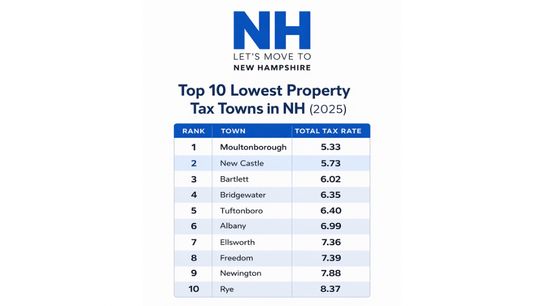
Moultonborough – New Castle – Bartlett – Bridgewater – Tuftonboro – Albany – Ellsworth – Freedom –Newington – Rye
These totals reflect the combined municipal, county, state education, and local education tax rates.
Regional Appeal Driving Demand
A closer look at the list reveals a clear pattern: many of the lowest-tax communities are located in some of New Hampshire’s most desirable regions.
In the Lakes Region, towns such as Moultonborough, Tuftonboro, and Freedom continue to attract both full-time residents and second-home buyers. Access to Lake Winnipesaukee and surrounding natural amenities has long made these communities popular, and the added benefit of lower tax rates strengthens their appeal.
Along the Seacoast, New Castle and Rye offer a combination of coastal living and proximity to employment centers such as Portsmouth and the greater Boston area. Despite higher home values, the relatively lower tax rates compared to neighboring markets continue to draw interest from relocating professionals.
In the White Mountains region, Bartlett and Albany are increasingly attractive to remote workers and outdoor enthusiasts. These towns offer access to skiing, hiking, and year-round recreation, while maintaining lower density and a quieter lifestyle.
Benefits of Low Property Tax Communities
For many buyers relocating from states with higher overall tax burdens, the opportunity to reduce annual property tax costs is a key consideration. Lower tax rates can translate into meaningful savings over time, particularly for higher-priced homes.
In addition to financial benefits, many of these towns offer strong long-term demand due to their location and lifestyle appeal. This combination often supports property value stability and makes these areas attractive for both primary residences and investment properties.
Trade-Offs to Consider
While low tax rates are appealing, they do not necessarily equate to lower overall housing costs. Many of the towns on this list, particularly in the Seacoast and Lakes Region, have higher-than-average home prices driven by demand and limited inventory.
In smaller or more rural communities such as Ellsworth and Albany, buyers may encounter fewer available listings and seasonal fluctuations in the housing market. Limited inventory can make it more challenging to secure a property, especially during peak buying seasons.
Additionally, lower tax rates may reflect differences in municipal services, school systems, or infrastructure. Buyers are encouraged to evaluate these factors alongside tax rates when comparing locations.
What It Means for Relocating Buyers
As migration into New Hampshire continues, property tax rates remain a significant factor shaping buyer decisions. The towns with the lowest rates are increasingly seen as strategic options for those seeking both financial efficiency and lifestyle benefits.
However, real estate professionals note that the most successful relocation decisions take a broader view—balancing tax rates with home prices, local amenities, and long-term goals.
Outlook for 2026
With demand expected to remain steady, particularly from out-of-state buyers, low property tax communities are likely to continue attracting attention. Limited inventory and sustained interest may also contribute to continued price pressure in these markets.
For those planning a move, understanding how property taxes fit into the overall cost of living will remain an essential part of the decision-making process.
Readers can explore more relocation insights and local market trends at Let’s Move to New Hampshire News, a resource for buyers planning their next move to the Granite State.