
New Hampshire, long considered a low-risk state when it comes to hurricanes, has now been ranked among the states with the highest number of homes vulnerable to hurricane-related damage, according to new data from research firm Cotality. The report reveals that 220,415 homes in the state face moderate or greater risk, with a total reconstruction cost value of $87.7 billion.
This designation reflects a growing trend in the national housing market, where buyers are increasingly factoring climate resilience into their decisions. In a time when home price growth has stagnated and inventory remains historically low, seaside communities once favored for their charm and perceived safety — including those along New Hampshire’s small but densely populated coastline — are being reevaluated through a new lens.
The shift is driven in part by a rising awareness of the financial toll of severe weather. According to the Federal Emergency Management Agency (FEMA), just one inch of floodwater can cause up to $25,000 in damage — a staggering figure for homeowners who may not have previously considered hurricane exposure a concern in the Granite State.
“Balancing the cost of coastal living has always required a certain level of risk tolerance,” the Cotalityreport notes. “But as the frequency and intensity of storms increase, the margin for error is shrinking — even in states not traditionally known for tropical weather impacts.”
The report explores the widening financial and social consequences of living in areas that may be less experienced in handling hurricanes and the long-term damage they can cause. As sea levels rise and storm systems grow more unpredictable, the risk profiles of communities up and down the U.S. coastline are being rewritten — and New Hampshire is no exception.
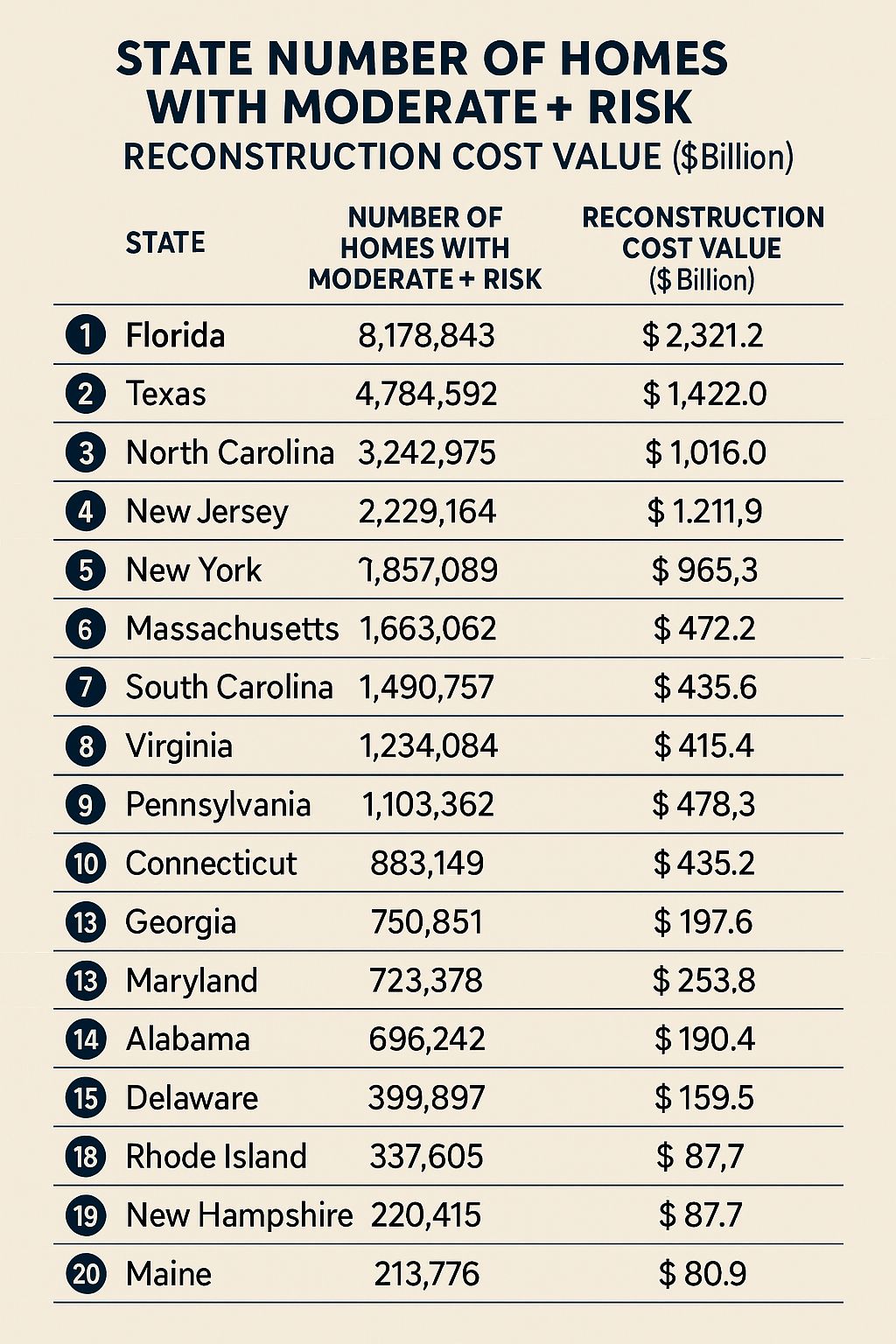
DATA SOURCE: COTALITY, 2025
Real estate professionals and public officials are now facing critical questions about infrastructure, building codes, and emergency preparedness. With $87.7 billion in potential reconstruction costs tied to vulnerable properties, the stakes are high not just for homeowners, but for the state’s overall economic resilience.
In a state prized for its blend of coastal charm and natural beauty, New Hampshire’s place on the hurricane damage risk list is a reminder that no region is immune to the growing impacts of a warming planet. As the market adapts, climate risk will play an increasingly central role in shaping how — and where — people buy and build homes.