
Moving to a new state is a major life transition, and when it involves downsizing your belongings, it can feel even more daunting. Whether you’re moving from coast-to-coast or just a few states over, simplifying your belongings will help you adjust to your new home with ease. Now is the perfect opportunity to re-evaluate your possessions and declutter. Whether you’re transitioning to a smaller home, adapting to a new climate, or simply embracing a fresh start, streamlining your move will ensure your new space is functional and comfortable.
The reality is that the average home contains over 200,000 items— from kitchen gadgets to seasonal décor to clothing to sports equipment. If you’re downsizing or need to adapt to a differentclimate or lifestyle, it’s time to let go of some things. Here’s how to manage the process, step by step, and ensure a smooth move to your new home.
Step 1: Break the Process into Bite-Sized Tasks
Downsizing is much more manageable when you take it one step at a time. Begin by creating a moving checklist or decluttering calendar by working backwards from your moving date and assigning specific days or weeks to tackle different categories of items such as clothing, sports equipment, memorabilia, kitchen items, or home décor. By breaking the process into smaller, focused tasks you’ll avoid feeling overwhelmed.
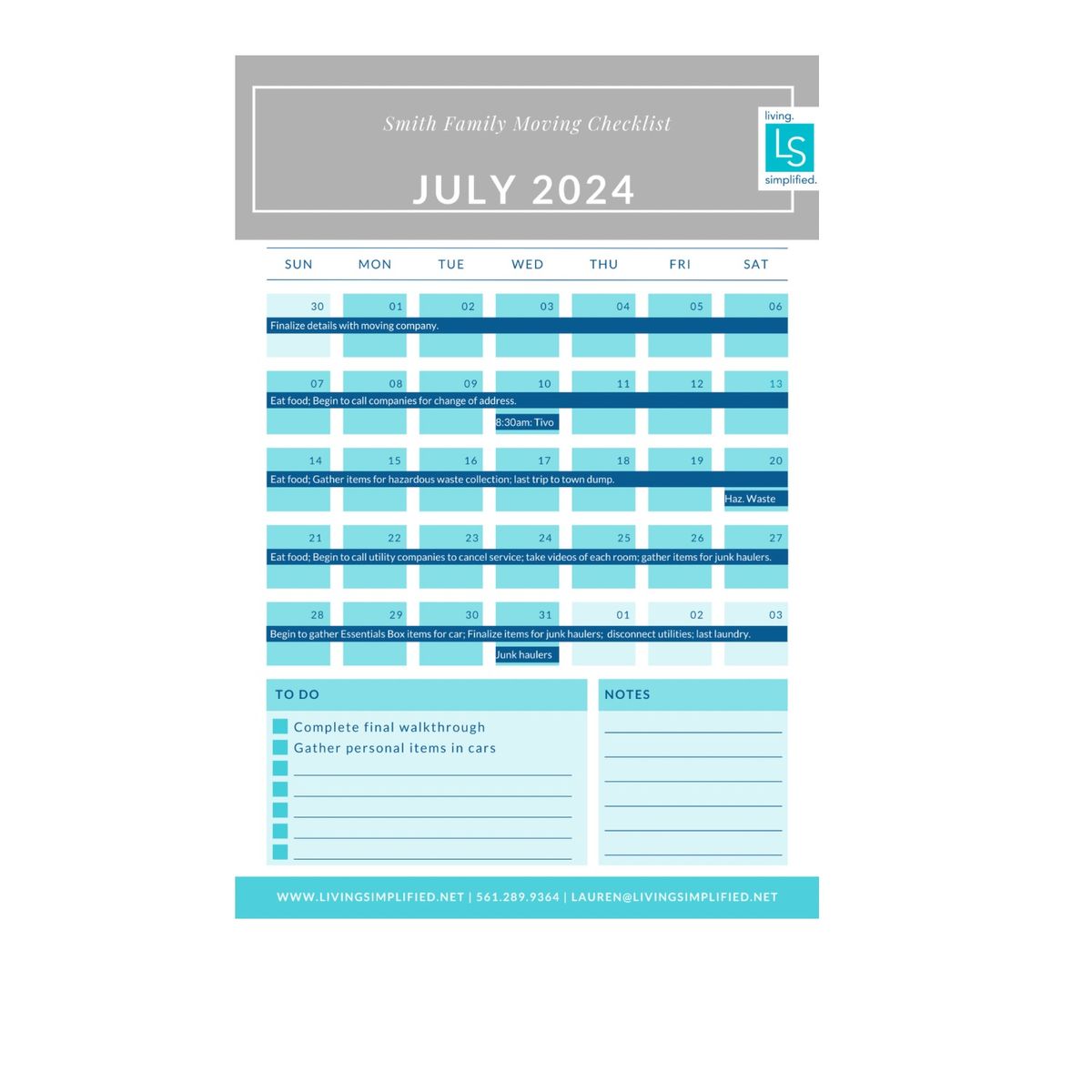
Sample Moving Checklist from Living. Simplified. LLC
It’s also important to ask yourself key questions:
• Are you moving with children or pets?
• Will you need to accommodate overnight guests?
• Will you be moving to a smaller home, or simply adjusting to a new climate?
• Will your lifestyle change (e.g., retirement, working from home)?
Having clear answers will guide you as you decide what to keep, donate, sell, or discard.
Step 2: Take a Deep Dive into Your Belongings
Moving is the perfect time to reassess what you’ve accumulated over the years. Downsizing is about simplifying your life but deciding what to keep can be challenging. Asking the right questions will help.
• Do I love it? If an item doesn’t bring joy or hold value, it may be time to let it go.
• Why do I have it? Understanding why you’ve held onto something will help determine if it still serves a purpose.
• How often do I use this? Regular use means it’s probably worth keeping.
• Does it fit my new lifestyle? If you’re moving to a different climate or adopting a new lifestyle (e.g., skiing less but golfing more), prioritize accordingly.
• Will it fit in my new home? Measure carefully to ensure larger items like furniture will work in your new home.
• Would I buy it again today? If the answer is no, it’s a clear signal to let the item go.
• Is this item irreplaceable? Keep sentimental or rare items but be selective.
• Is it worth the space it’s taking up? If it doesn’t contributeto your happiness or functionality, it may not be worth moving.
These questions are particularly important when moving to a new state, where space and climate may differ.
Step 3: Declutter by Category
Decluttering by category is one of the most effective strategieswhen. This method is especially helpful when moving to a new state where your space, climate, and lifestyle can be dramatically different. By focusing on one category at a time, you can make thoughtful decisions that reflect your future needs.This way you can make better decisions about what to keep, sellor donate.
Here are a few key categories to consider:
• Clothing and Footwear: Assess whether you’ll need bulky winter coats or lighter summer wear based on your new climate.
• Outdoor Furniture: Will your current patio set or grill withstand the weather in your new location?
• Paperwork: Moving to a new state often requires document updates. Digitize or discard old paperwork.
• Large Appliances: Consider whether your appliances will fit in your new home or be compatible with the utilities there.
By working through each category, you can approach the downsizing process efficiently and with clearer priorities. Remember, the goal is to make the transition as smooth as possible.
Step 4: Create a Photo Inventory and Compare with Your New Home
Once you’ve sorted and decluttered your items, create a photo inventory of your belongings, especially large furniture pieces. Compare your furniture with the floor plan of your new home. Will your sectional fit, or would a smaller sofa be more practical? Use the inventory to make informed decisions about what stays and what goes.
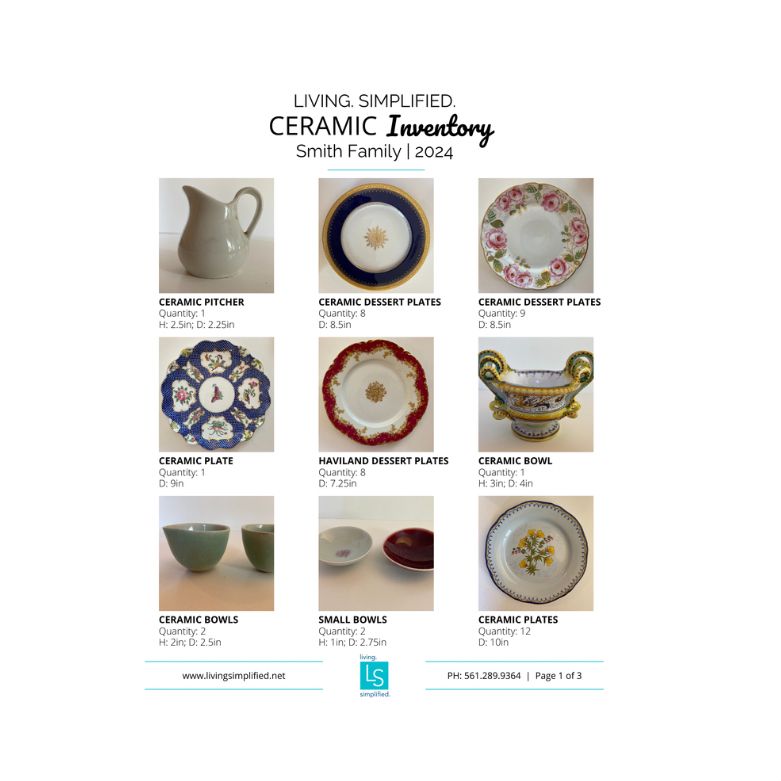
Sample Photo Inventory from Living. Simplified. LLC
Step 5: Make a Plan
Downsizing requires more than decluttering — it requires careful planning. Create a detailed plan for your move including hiring a realtor, book a moving company, and enlisting the help of a professional organizer to help streamline the process. Consider working with an estate sale company or auction house to sell high-value items you no longer need.
Step 6: Set a Firm Move Date
If your move is fast approaching, prioritize downsizing. If you’re planning well in advance, take the opportunity to gradually declutter, making the process more manageable over time. Once you’ve set a firm move date, confirm it with your movers and any other service providers, such as cleaners, professional organizers or estate sale professionals.
Step 7: Identify Items of Value and Sentiment
Not everything you think has value is worth keeping. Consult an estate sale expert or appraiser if you’re unsure. This is also the perfect opportunity to pass on sentimental items to family or friends. Has a family member always admired one of your heirloom pieces? Or does a friend love your end table that you no longer have space for? Now is the time to give these items a new home with loved ones who will appreciate them.
Step 8: Donate or Sell What You Don’t Need
Identify local charities that accept donations and schedule pick-ups or drop-offs. For valuable items, consider hosting an estate sale or listing them online. Letting go of things that no longer serve you will help your transition.
Step 9: Gather and Protect Important Documents
Moving to a new state requires organizing your important documents like your passport, birth certificates, legal documents, medical records, and insurance information. Store these items securely and ensure you know where they are during the move.
Update your driver’s license, voter registration, and enroll your children into new schools, in your new state. Shred outdated paperwork to reduce clutter before you move.
Step 10: Prepare for Your New Environment
Moving to a new state often means adjusting to a new climate. If you’re headed to a colder state, now is the time to invest in weather-appropriate clothing, like winter coats, boots, gloves, and scarves. Don’t forget about car maintenance — consider getting snow tires and learning how to care for your vehicle in the winter to avoid damage.
Conversely, if you’re moving to a warmer climate, pare down your winter wardrobe and focus on lighter, more versatile items. You’ll want to assess whether your current outdoor furniture, lawn equipment, and tools are suitable for your new home.
Step 11: Eat Through Your Pantry
Reduce the amount of food you’ll need to move by planning meals around your pantry’s contents. Minimize grocery shopping in the weeks before the move and use up what you have.
Step 12: Stop Subscriptions and Streamline Entertainment
As you prepare for your move, pause or cancel subscriptions you no longer use. This includes magazine or newspaper subscriptions, which can add to the clutter. Use your move as an opportunity to reevaluate your reading materials and decide what’s worth keeping.
A Fresh Start Awaits
Downsizing for a move to a new state can be emotional and physically demanding, but by breaking it down into manageable tasks and asking the right questions, you’ll ensure a smooth transition. The key is to focus on keeping only the items that serve you, bring you joy, or are essential for your new life. The result? A clutter-free home and a fresh start in your new state.
About Lauren Saltman -Professional Organizer and Move Manager
Lauren Saltman is the owner of Living Simplified, a professional organizing and move management
company dedicated to transforming homes into organized, functional spaces. Specializing in working
with busy families and retirees, Lauren customizes each project to meet her clients' unique needs.
Believing that every home is different, she tailors her approach to create organizing strategies that
seamlessly fit into their lifestyles.